Transforming Care Beyond Hospital Walls

ID Medical’s Virtual Smart Hospital model supports NHS organisations to deliver safe, clinically governed care beyond traditional hospital settings.

Combining digital triage, remote patient monitoring, AI-enabled risk stratification and coordinated multidisciplinary oversight, the model helps identify deterioration earlier, prevent avoidable admissions and support patients to recover safely at home or within community settings.

How We Support Trusts

£300

Saving per patient, per day versus a hospital stay

£3m+

Potential annual cash-releasing benefit per ward

7.4

Average recovery days at home, compared with 11 days in hospital

24/7

Consultant and senior clinical oversight

Relieving Pressure Across Hospital Pathways

High bed occupancy, delayed discharge, workforce constraints and increasing patient acuity continue to place pressure across urgent, acute and community services.

Our Virtual Smart Hospital model helps organisations create additional capacity beyond physical hospital settings, supporting reduced A&E attendances, admission avoidance, earlier discharge and improved patient flow.

Patients remain under agreed clinical governance throughout the pathway, with technology supporting rather than replacing clinical judgement.

Ask Us About Virtual Support

A Virtual Hospital Model Built Around Whole-Pathway Support

A Virtual Hospital Model Built Around Whole-Pathway Support

More Than a Traditional Virtual Ward

Virtual Smart Hospitals extend beyond a single virtual ward or condition-specific pathway.

Our end-to-end model can combine digital triage, predictive monitoring, AI-enabled risk stratification and multidisciplinary clinical support across urgent care, acute services, community pathways, mental health and care homes.

The workforce, technology and governance model can be configured around your patients, pathways and operational requirements.

Enabling the Left Shift

The left shift moves appropriate care away from high-cost acute hospital settings and closer to patients’ homes and communities.

Our model supports this transition through step-up and step-down pathways, helping patients receive the right care in the most appropriate setting.

Remote monitoring, predictive insights and clearly defined escalation processes allow clinical teams to maintain visibility and intervene quickly when a patient’s condition changes.

Supporting Step-Up Care

Step-up care provides an alternative pathway for patients who become acutely unwell but may not require admission to a physical hospital ward.

Digital triage and remote monitoring help clinical teams assess the patient’s condition, understand their level of risk and determine whether they can be safely treated at home or within the community.

Where a patient’s condition changes, agreed escalation pathways support timely intervention or transfer into acute care.

Enabling Earlier Step-Down Care

Step-down care allows appropriate patients to leave hospital earlier while continuing to receive treatment, monitoring and clinical oversight beyond the ward.

Patients can recover at home or within a community setting, with clinical teams maintaining visibility through connected devices, regular reviews and agreed escalation processes.

This can support earlier discharge, release inpatient capacity and reduce the risks associated with extended hospital stays.

dedicated virtual and visiting Nurses

Why Partner With ID Medical?

ID Medical combines clinical workforce expertise, service management capability and senior clinical leadership to deliver safe, scalable virtual care across acute, community, mental health and care home pathways.

We combine multidisciplinary clinical capability with robust governance, technology-enabled care and experienced service management, enabling each model to be configured around local pathways and priorities.

Our flexible delivery models can address immediate capacity pressures or support longer-term pathway transformation, helping NHS organisations expand care beyond hospital walls without compromising quality, safety or patient experience.

Partner With Us For Virtual Care
dedicated virtual and visiting Nurses

How We Help Trusts Deliver Safe, Scalable Virtual Care

Safe, Scalable Virtual Care

Digital Triage
Support

With digital triage, patients are assessed against agreed clinical and pathway criteria before entering the virtual care service.

Digital triage helps clinical teams understand risk, prioritise patients and determine the most appropriate pathway, whether that involves remote care, community intervention or hospital treatment.

This supports consistent decision-making while ensuring virtual care remains clinically appropriate for each patient.

Remote Patient Monitoring

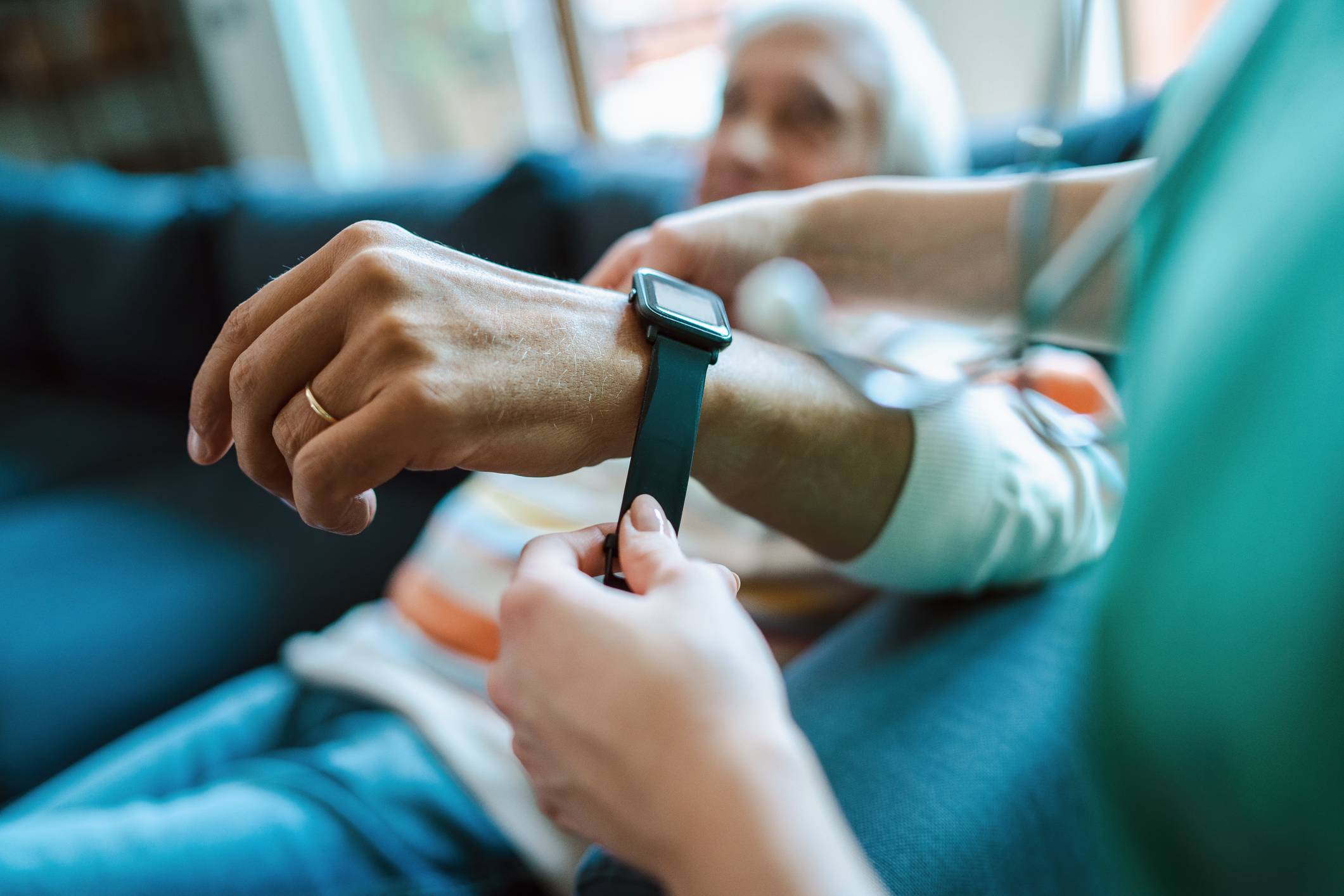
Connected monitoring and diagnostic devices capture relevant patient observations from the home, care home or community setting.

Information is securely transmitted to a central clinical platform, giving teams access to live readings, historical trends and automated alerts between scheduled reviews.

This provides greater visibility of the patient’s condition without requiring them to remain within a physical hospital environment.

AI-Enabled Risk Stratification

AI-supported analytics can help clinical teams identify changes in risk, co-occurring symptoms and emerging patterns across patient information.

This supports clinical prioritisation by helping teams identify which patients may require earlier review or more intensive monitoring.

Clinical decisions remain with appropriately qualified professionals, with technology providing additional intelligence to support their judgement.

Predictive Analytics and Reporting

Predictive analytics can help clinical teams understand how a patient’s condition is developing rather than relying only on isolated readings.

Trend analysis and early-warning indicators support earlier identification of deterioration, enabling clinicians to intervene before a patient reaches crisis point.

At pathway level, reporting can also provide insight into demand, patient outcomes, service utilisation and opportunities for improvement.

Multidisciplinary Oversight and Early Intervention

Consultants, Nurses and wider multidisciplinary professionals review patient information through agreed clinical workflows.

Virtual oversight can be combined with telephone contact, video consultations, face-to-face assessment and community intervention according to clinical need.

Where a patient’s condition deteriorates, predefined escalation pathways support timely review, treatment or admission.

An End-to-End Virtual Care Delivery Model

ID Medical brings together the clinical workforce, senior leadership, governance and technology needed to deliver safe, scalable virtual care.

Our model can include 24/7 clinical oversight, appropriately experienced virtual and visiting clinicians, monitoring and diagnostic equipment, multidisciplinary review, agreed escalation pathways and face-to-face intervention according to patient need.

From mobilisation and compliance through to ongoing service management and reporting, we provide the operational support required to deliver a fully managed service across the pathway.

Talk to Us About Your Pressures

Tailored Virtual Care Across Health and Care Pathways

Virtual Care For Different Pathways

Virtual care is not a single standardised service. Acute care, community services, mental health and care homes each require different clinical skills, monitoring protocols, escalation processes and approaches to patient engagement.

ID Medical can configure the workforce, technology and service model around the needs of each environment, pathway and patient population.

This allows organisations to address specific operational challenges while maintaining consistent governance and clinical oversight, and supporting improvements in access, capacity, patient flow and outcomes.

Acute Virtual Hospital Support

Designed for acute trusts, urgent and emergency care teams and system leaders, our Acute Virtual Hospital model supports clinically appropriate patients who require hospital-level oversight without necessarily occupying a physical ward.

Digital triage, remote monitoring, multidisciplinary review and clearly defined escalation pathways support step-up care, admission avoidance and earlier step-down from hospital.

This helps reduce avoidable A&E attendances and admissions, improve patient flow, release acute bed capacity and allow patients to recover in familiar surroundings, where clinically appropriate.

Community Care Support

For community providers, neighbourhood teams and integrated care systems, our community model can support frailty, long-term condition management, post-discharge recovery and patients living with complex comorbidities.

Remote monitoring and coordinated clinical oversight help connect care across patients’ homes, primary care, community teams and specialist services.

Earlier identification of deterioration can support timely intervention, reduce avoidable emergency presentations and improve continuity of care, while helping patients maintain independence within their communities.

Virtual Mental Health Support

For mental health trusts, community mental health teams and specialist pathway leads, virtual care can support structured monitoring across patients’ physical and mental health needs.

The model can include medication monitoring and optimisation, remote clinical review, multidisciplinary oversight and agreed escalation processes, with face-to-face intervention if required.

This supports earlier identification of deterioration, reduces avoidable inpatient admissions, enables earlier discharge and improves access and engagement for patients who may struggle with traditional service models.

Supporting Care Homes

Designed for care home providers, community teams and primary care services, the model enables residents to receive structured monitoring and clinical assessment within familiar surroundings.

Connected devices and digital clinical workflows can give appropriate professionals greater visibility of changing patient needs and support timely clinical review and intervention.

This can help reduce avoidable ambulance conveyance and hospital attendance while improving coordination between care homes, primary care, community teams and acute services.

Financial and Operational Benefits

Virtual care can support lower-cost models of care for clinically appropriate patients who do not need to remain within a traditional inpatient setting.

By reducing reliance on escalation beds and temporary staffing, while relieving pressure on physical estate, organisations can release capacity and use resources more effectively.

The model can also support wider transformation programmes, helping systems move care closer to home while improving productivity, pathway resilience and patient outcomes.

Explore the Benefits Further

Ready to Build Capacity Beyond Hospital Settings?

Virtual Smart Hospital support gives NHS organisations a practical way to increase capacity without relying solely on physical estate, inpatient beds or additional temporary workforce.

By combining clinical delivery with digital triage, AI-supported insights, predictive monitoring and multidisciplinary oversight, ID Medical can help redesign pathways around prevention, earlier intervention and care closer to home.

The model can address immediate operational pressures or form part of a wider transformation programme across acute, community, mental health and care home services.

Get In Touch with Our Client Solutions Team