

How Insourcing Cut Colonoscopy Waiting Lists at Royal United Hospitals Bath
NHS waiting list recovery remains one of the biggest operational pressures facing trusts. For endoscopy services in particular, rising demand, workforce constraints and elective recovery targets have created sustained strain.
This case study explores insourcing services designed for the NHS and how Royal United Hospitals Bath (RUH Bath) partnered with ID Medical to reduce colonoscopy backlogs, protect patient experience and stabilise service delivery — without disrupting existing teams.
The Pressure Point: Growing Endoscopy Backlogs
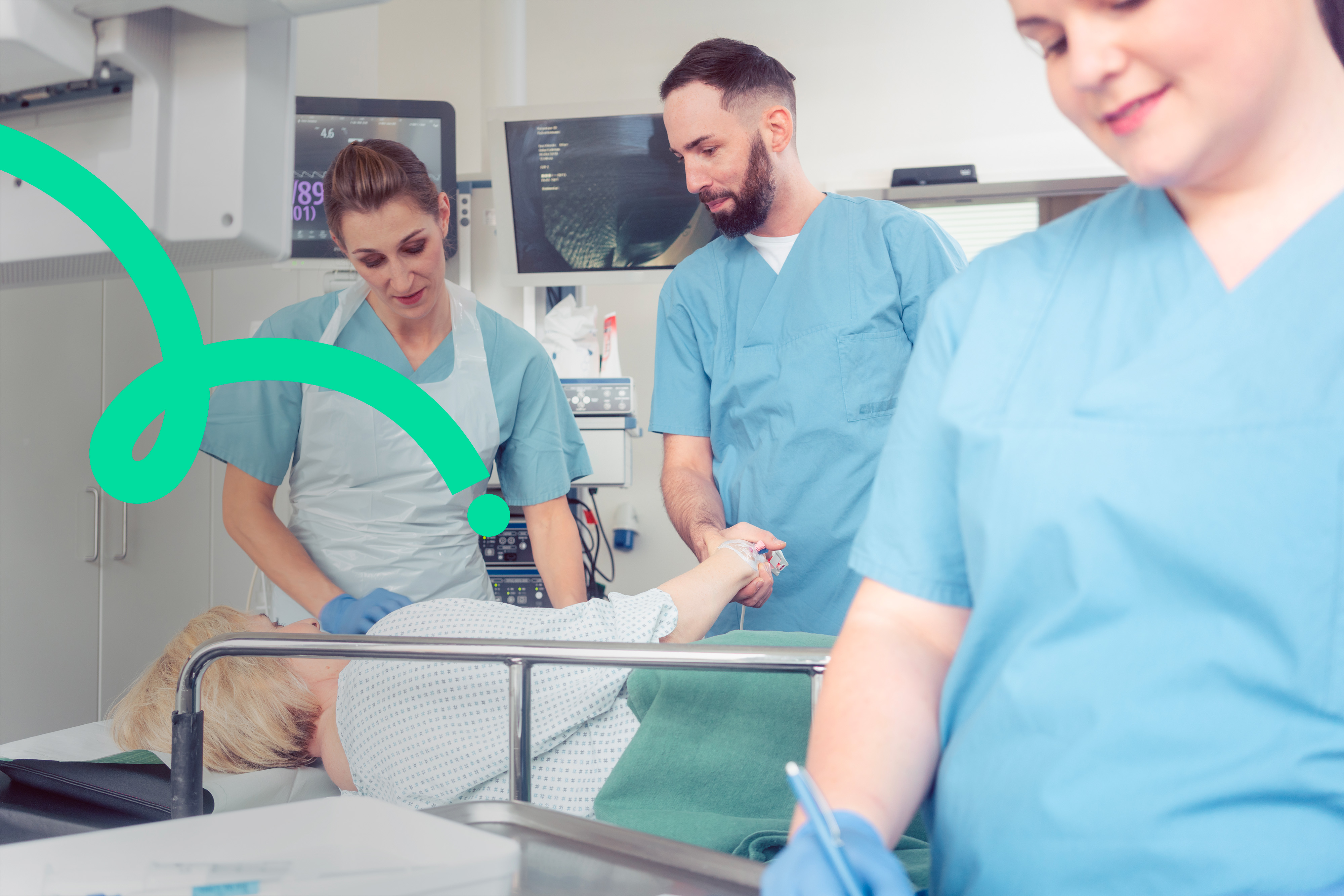
Like many Trusts nationally, RUH Bath faced increasing demand for diagnostic endoscopy services. Colonoscopy waiting lists were growing, placing pressure on operational teams and creating understandable anxiety for patients awaiting diagnosis.
National guidance and sector commentary continue to highlight the importance of efficiency and innovation in reducing waiting lists for endoscopy services, particularly through flexible capacity models and structured recovery plans.
Without additional, reliable capacity, the backlog risked escalating further — with implications for RTT performance, patient safety and workforce wellbeing.
Why RUH Bath Chose an Insourcing Partner
Following a formal tender process, RUH Bath sought an NHS insourcing provider that could:
- Mobilise rapidly
- Deliver consultant-led governance
- Integrate seamlessly into existing pathways
- Provide consistent regional clinical teams
- Offer predictable, ring-fenced capacity
National guidance from NHS England emphasises that insourcing should be delivered through compliant framework routes, with appropriate governance and quality oversight. RUH Bath required a partner that aligned with this approach and could operate as an extension of the Trust, not an external bolt-on.
The decision centred on securing a reliable insourcing partner that could stabilise waiting lists without creating additional internal strain.

A Collaborative Insourcing Approach
Rather than a parallel service, this was clinical insourcing designed to work within the Trust’s established pathways.
Early alignment sessions were held with clinical and operational leads to map:
- Existing patient pathways
- Booking and pre-assessment processes
- Reporting and governance structures
- Escalation protocols
The insourcing model was built around RUH Bath’s ways of working, ensuring diagnostic endoscopy services supported — rather than disrupted — core activity.
As outlined in broader elective recovery strategy discussions, sustainable backlog reduction depends on partnership models that embed into existing systems rather than compete with them.
What Was Delivered On the Ground
Weekend and evening endoscopy lists
The programme focused on additional weekend endoscopy lists and evening sessions, maximising out-of-hours capacity while protecting weekday core services.
Dedicated, consultant-led teams
Experienced endoscopy clinicians delivered additional lists with full governance oversight and documentation standards aligned to the Trust.
Swift mobilisation
The service was mobilised within five weeks of contract award — a critical factor in preventing further growth of the colonoscopy backlog.
Seamless integration
The model integrated into existing reporting, patient communication and escalation systems, ensuring continuity and consistency.
Key Outcomes From the Colonoscopy Insourcing
Over the delivery period:
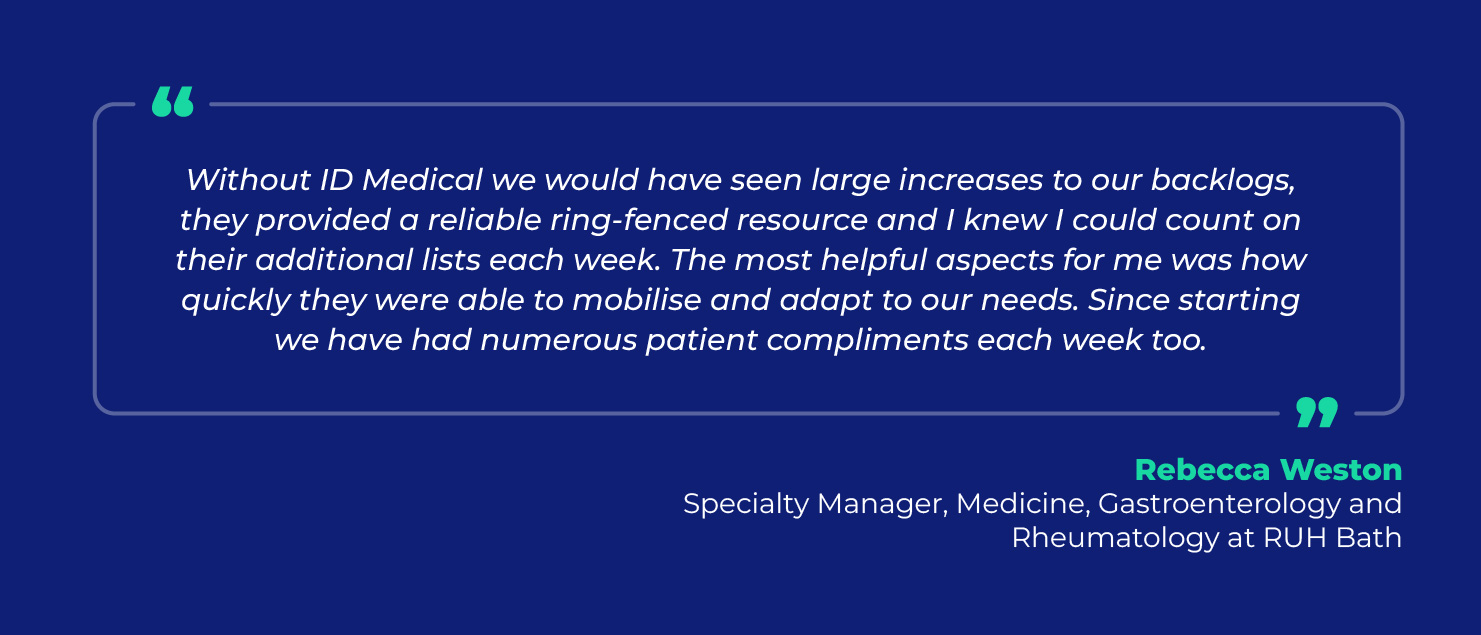
- 2,338 patients were seen
- Colonoscopy waiting list levels were stabilised
- Faster diagnosis supported improved patient pathways
- 98% average patient satisfaction was achieved
- Reliance on unpredictable staffing was reduced
For reducing NHS waiting lists safely, these metrics demonstrate that endoscopy insourcing can deliver both operational control and patient-centred outcomes.
More Than Capacity: Operational Improvement
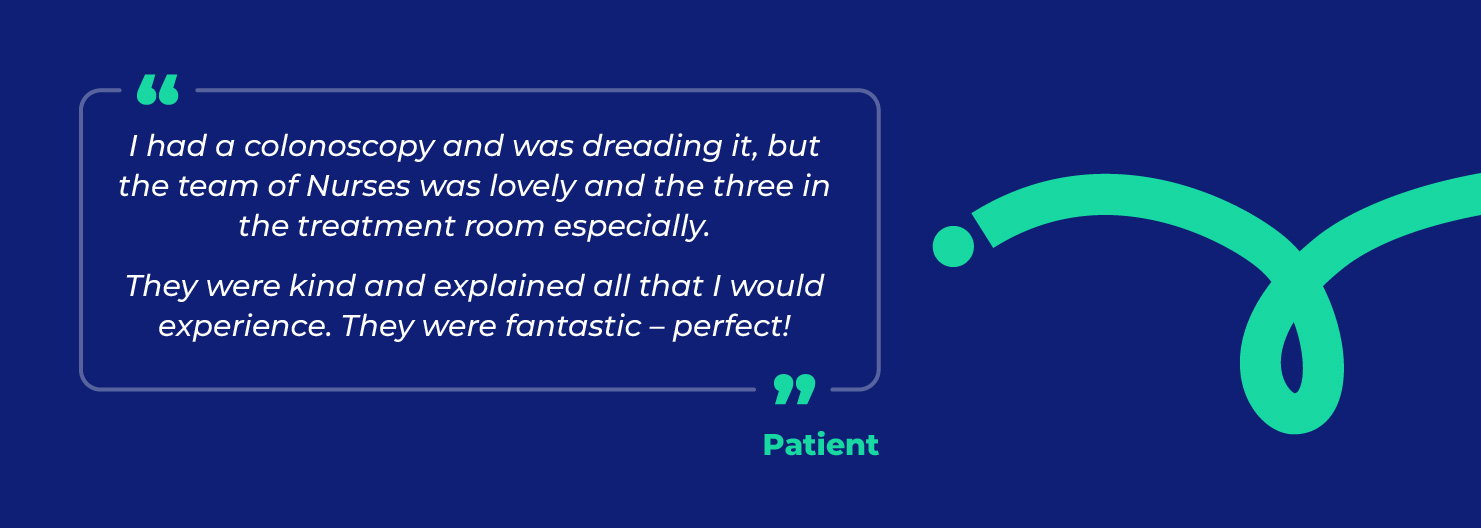
During delivery, best-practice recommendations were embedded into service processes, supporting longer-term efficiency gains beyond backlog recovery. The partnership model strengthened resilience, helping RUH Bath maintain control of activity levels while protecting internal teams from burnout.
This reflects a broader shift in how NHS backlog reduction services are evaluated — not purely on volume delivered, but on governance, sustainability and integration.
What This Means For Other NHS Trusts
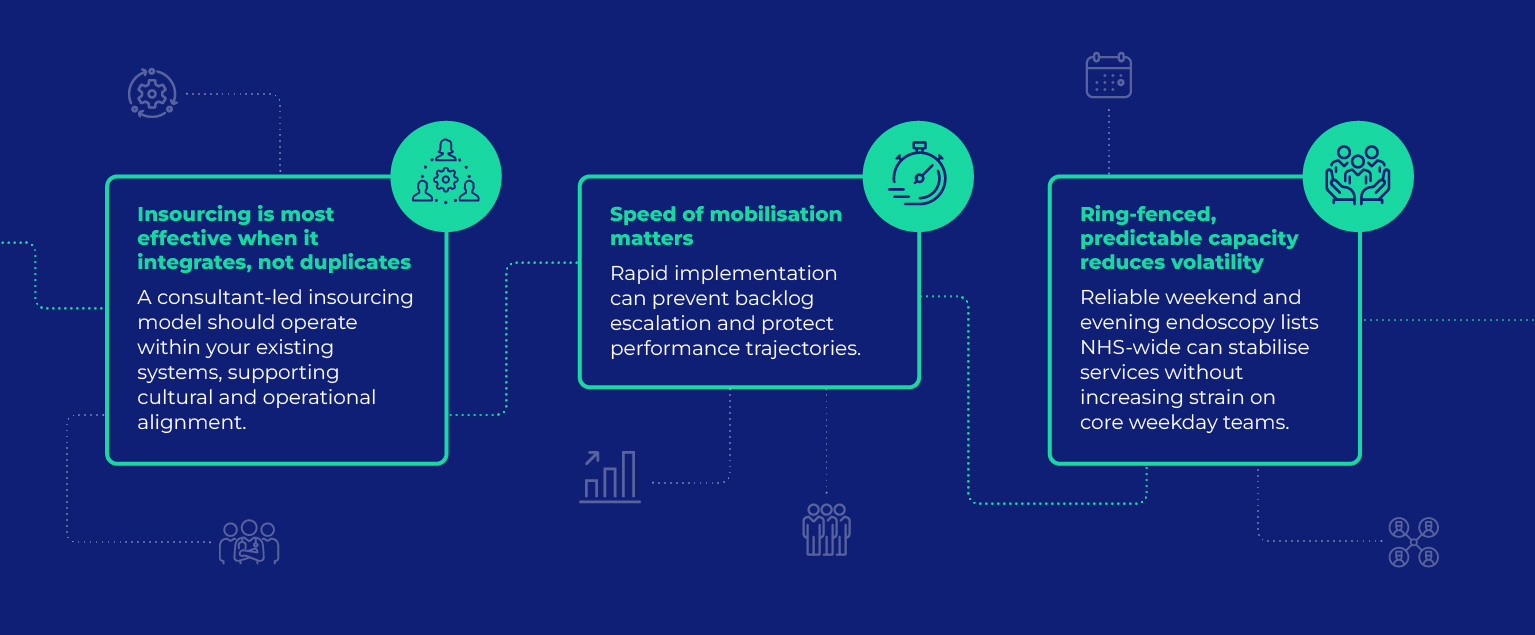
For other trusts facing similar pressures, this clinical insourcing example highlights key lessons:
Explore your options
If your trust is reviewing options for endoscopy insourcing, elective recovery support or broader NHS backlog reduction services, our Clinical Services team can help you assess the right model.
Speak to our team:
Call: +44 (0) 1908 525 756